
Transition to Primary School for Those with a Rare Disease - Part 2
Transition can be a tricky process regardless of what stage your child is at and it will always go differently for different people. Some children can’t wait and are filled with excitement, some will just ‘go with the flow’ and others will be filled with fear and anxiety, or maybe a mixture of all of these. For these reasons and the many more that parents of a child with a rare disease are faced with, it is absolutely crucial to open up dialogue with the care or educational provider.
My child has just turned 4 and I am sitting in a little meeting room while she is hopefully enjoying her first day in EYFS in her classroom next door. I am unable to leave site as I am not 100% satisfied with the paper work that has been completed by school. I am also aware that the medical training that I did with them before the summer holidays is now a very long 7 weeks ago. So, here I am.
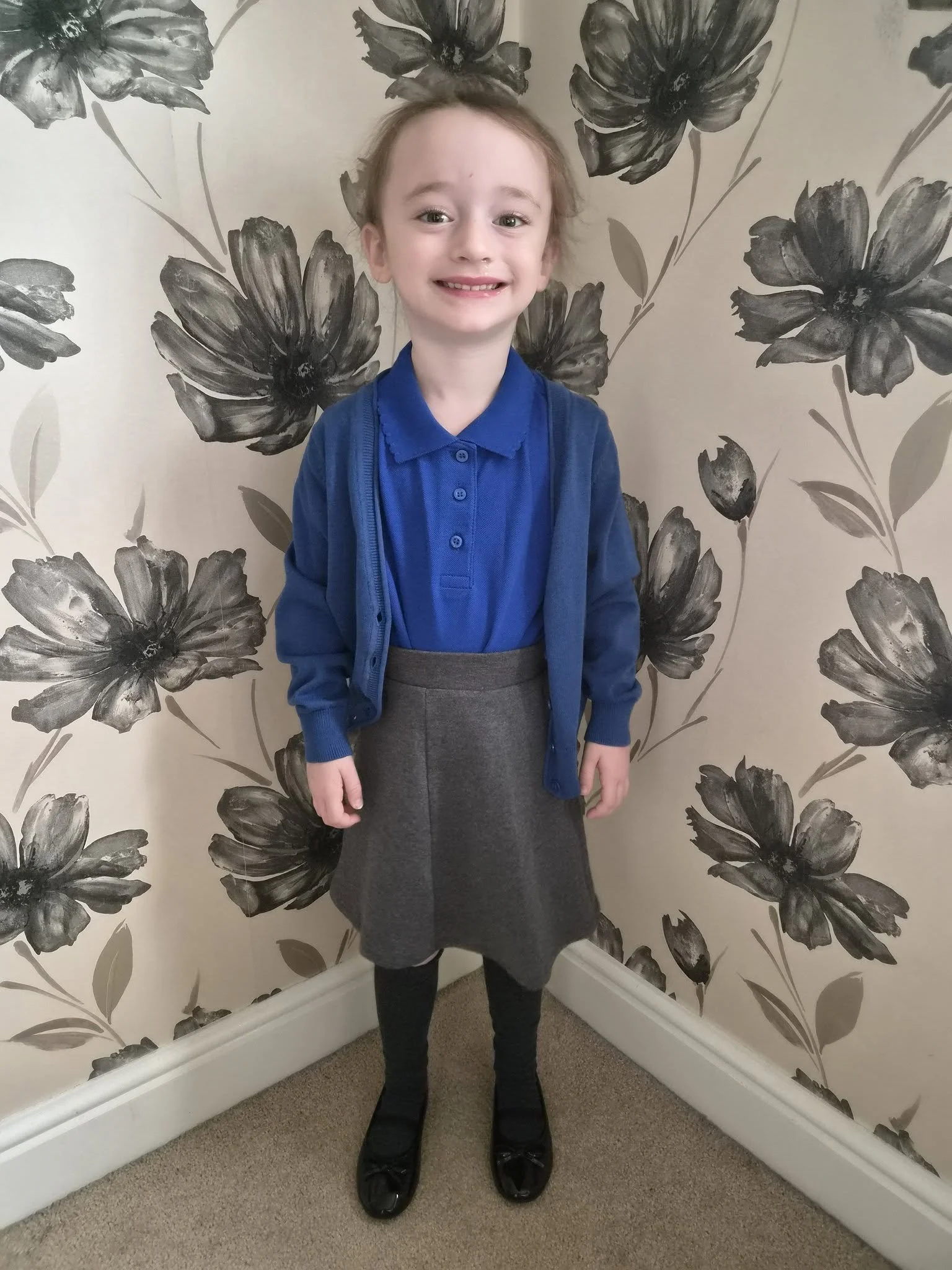
I have been communicating with the school for around 8 months now and this has involved the headteacher, deputy headteacher, SENDC0, EYFS Lead, class teacher and teaching assistant. This is a lot of people, but all of these people will be directly involved with my child’s care.
My own experience of talking to other parents, friends and family about my daughter’s condition is them putting their own ideas and interpretation on what I am telling them and feeling utter frustration because of this, sometimes the inability to speak up, or simply being too fed up to correct people again. However, there came a point, I think when this frustration was fed in to by nursery and it led to miscommunications between staff, endless phone calls, repeated meetings and people going with what they had been told by someone else and not clarifying their own understanding of the condition. This game of Chinese whispers was more than this now, it was dangerous.
Taking the positives away from this, it has taught me that all the information that is shared between ourselves and any relevant carer or education provider has to be exactly the same and to ensure that, it has to come from me.
Opening up a dialogue with the school before your child transitions into the Early Years Foundation Stage (EYFS), or any other stage, is particularly important when they have a rare disease because the school will need time to understand and prepare for their individual needs.
Key reasons include:
Understanding your child’s condition: Rare diseases may be unfamiliar to school staff. Early communication gives you the opportunity to explain how the condition affects your child and what staff should know.
Planning reasonable adjustments: The school can consider changes to the environment, routines, activities or learning approach so your child can participate as fully as possible.
Sharing medical information: Staff can understand any medication, treatment, monitoring, dietary requirements or emergency procedures that may be relevant during the school day.
Supporting safety and wellbeing: Agreeing what to do if your child becomes unwell helps staff feel prepared and ensures everyone knows their responsibilities.
Supporting a smooth transition: Starting school can be a big change for any child. Planning ahead can make the new environment, routines and people more familiar and reassuring.
Involving the right professionals: Where appropriate, the school can work with parents/carers and relevant health or SEND professionals to coordinate support.
Building a partnership with the family: Open communication means parents can share their knowledge of their child, while staff can explain what support the setting can provide.
Identifying needs early: A conversation before starting can highlight potential barriers and allow support to be arranged rather than waiting until difficulties arise.
It is incredibly important that any support document such as an Individual Healthcare Plan (IHP), risk assessment or an individual emergency plan is created with you, the parent or carer. You are the expert and your child may be different to the literature and the information that the Internet presents about the rare disease and it is important that this is built in to the documentation. My daughter has a rare disease that has a list of symptoms that are indicators of her reaching a medical crisis and all of this has been included in the documentation by the school. Good. But what they don’t understand is that this may be right for other children with the same rare disease, but it isn’t right for my daughter. My daughter is asymptomatic. So, while they are looking for her becoming fatigued or trembling, or becoming weak and pale, they could be missing her medical crisis because she will not present in this way. Therefore, I as her parent, have this valuable, life-saving piece of information it needs to be shared with all staff. Every child is unique and so can each symptom, or lack of symptom be. Without the open dialogue, this will be missed. Everything that is important to you as a parent/carer need to be important on the documentation too.
For a child with a rare disease transitioning into the Early Years Foundation Stage (EYFS), appropriate support documentation is important to ensure that their individual educational, medical, developmental and wellbeing needs are understood and consistently met. An Individual Healthcare Plan (IHP) is important as it provides staff with clear information about the child’s medical condition, treatment, medication and any actions required if the child becomes unwell. A SEND Support Plan can identify the specific barriers the child may experience in learning and participation and outline the additional support and reasonable adjustments required to enable them to access the EYFS curriculum. Risk assessments are important for identifying potential risks associated with the child’s condition and establishing appropriate measures to promote their safety while ensuring they can participate as fully as possible in everyday activities. Where medication is required, appropriate medication administration records and procedures ensure that staff have clear instructions and that medication is administered safely and recorded accurately. An emergency or individual care plan is particularly important where the child may experience episodes requiring an urgent response, as it ensures staff understand what signs to recognise and what action to take. A communication or child profile can provide staff with a concise overview of the child’s strengths, preferences, communication needs, routines and strategies that support them effectively. Finally, a transition plan is valuable because it allows the family, school and relevant professionals to work together before the child starts, ensuring that appropriate arrangements are in place and that staff are prepared to provide a safe, inclusive and supportive transition into EYFS. Collectively, these documents promote consistency, effective communication and a child-centred approach, helping to ensure that the child’s rare disease does not become a barrier to their participation, development or inclusion within the setting.
As a parent, you can play a really important role in making sure the school is prepared before your child starts EYFS. You don't have to manage everything yourself—the aim should be to work in partnership with the school and relevant professionals.
Things you can do
1. Arrange an early meeting with the school
Ask for a meeting with the SENDCo, EYFS teacher/key person and, where appropriate, the school nurse or other relevant professionals. Try to have this conversation before your child starts, rather than waiting for problems to arise.
2. Provide clear information about your child's needs
Give the school information about the rare disease, but also explain how it affects your individual child. Include their strengths, communication style, routines, triggers, symptoms, fatigue, mobility, eating/drinking needs and anything else staff need to understand. Ensure that you highlight anything that may differ from the expectations, common misconceptions, or available literature. You know your child and you are the expert.
3. Ask what documentation will be put in place
You can specifically ask whether your child will need an Individual Healthcare Plan, SEND Support Plan, risk assessments, medication arrangements, emergency procedures and a transition plan. Ask to be involved in creating and reviewing these documents.
4. Share information from healthcare professionals
Where appropriate, ask your child's specialist team or other professionals to provide written guidance for the school. This can help staff understand the condition and make sure support is based on accurate medical information rather than assumptions.
5. Create an emergency plan with the school
Make sure staff know what signs may indicate that your child is becoming unwell, what action they should take, who needs to be contacted and when emergency medical help is required.
6. Ask about staff training
If your child's condition requires specific care, ask which members of staff will need training and how the school will ensure that there is appropriate cover when those staff members are absent.
7. Plan the transition together
Ask whether your child can have additional visits, meet their key staff, become familiar with the classroom and gradually experience the routines before starting. This can help identify difficulties while there is still time to address them.
8. Keep communication open after your child starts
Arrange a review after the first few weeks and continue to communicate with the school about what is working and what isn't. Your knowledge of your child is extremely valuable when evaluating whether the arrangements are effective.
Keep the dialogue open.