
Transition to Primary School for Those with a Rare Disease - Part 2
Transition can be a tricky process regardless of what stage your child is at and it will always go differently for different people. Some children can’t wait and are filled with excitement, some will just ‘go with the flow’ and others will be filled with fear and anxiety, or maybe a mixture of all of these. For these reasons and the many more that parents of a child with a rare disease are faced with, it is absolutely crucial to open up dialogue with the care or educational provider.
Transition to Primary School for Those with a Rare Disease
For many families, transition to primary school will not be straight forward and will be different for each child with a rare disease. This will impact on everyone differently and what one family does may be different to another family and that is ok.

When School Isn’t Simple: The Hidden Mental Health Impact of Rare Disease
Children with rare diseases often carry an invisible emotional load into school; fear of being misunderstood, pressure to mask symptoms and the loneliness of being “the only one”. This Mental Health Awareness Week, we explore how rare conditions impact pupils’ wellbeing, why school can amplify that strain and how awareness, flexibility and belonging can transform a child’s experience.

Celebrating Siblings: The Quiet Strength at the Heart of Rare Families
Siblings are the quiet strength at the centre of rare families carers, companions, protectors and constant supporters. On World Siblings Day, we’re celebrating their resilience while recognising the sacrifices they make and the childhood moments they sometimes miss. Parents often carry a deep worry for these incredible young people, who grow up quickly in the shadow of rare disease. With the support of charities like Sibs, we can ensure siblings are seen, valued and supported. Read the full blog to honour their stories and their extraordinary role in family life.
Fighting for My Child’s Right to an Education
Trying to secure a school place for my son should never have felt like a battle, yet every step was met with resistance. Preschools called him “too expensive.” State schools refused him without even meeting him. Services passed us back and forth while his basic right to an education was quietly denied. My son has a rare bleeding disorder; no behavioural needs, no learning needs, just a medical condition that makes schools nervous. The impact rippled through our whole family, especially his siblings, who watched doors close on their brother. This is the story of how we kept fighting until someone finally said yes.
Why Every School Needs a Symptom Cluster Policy
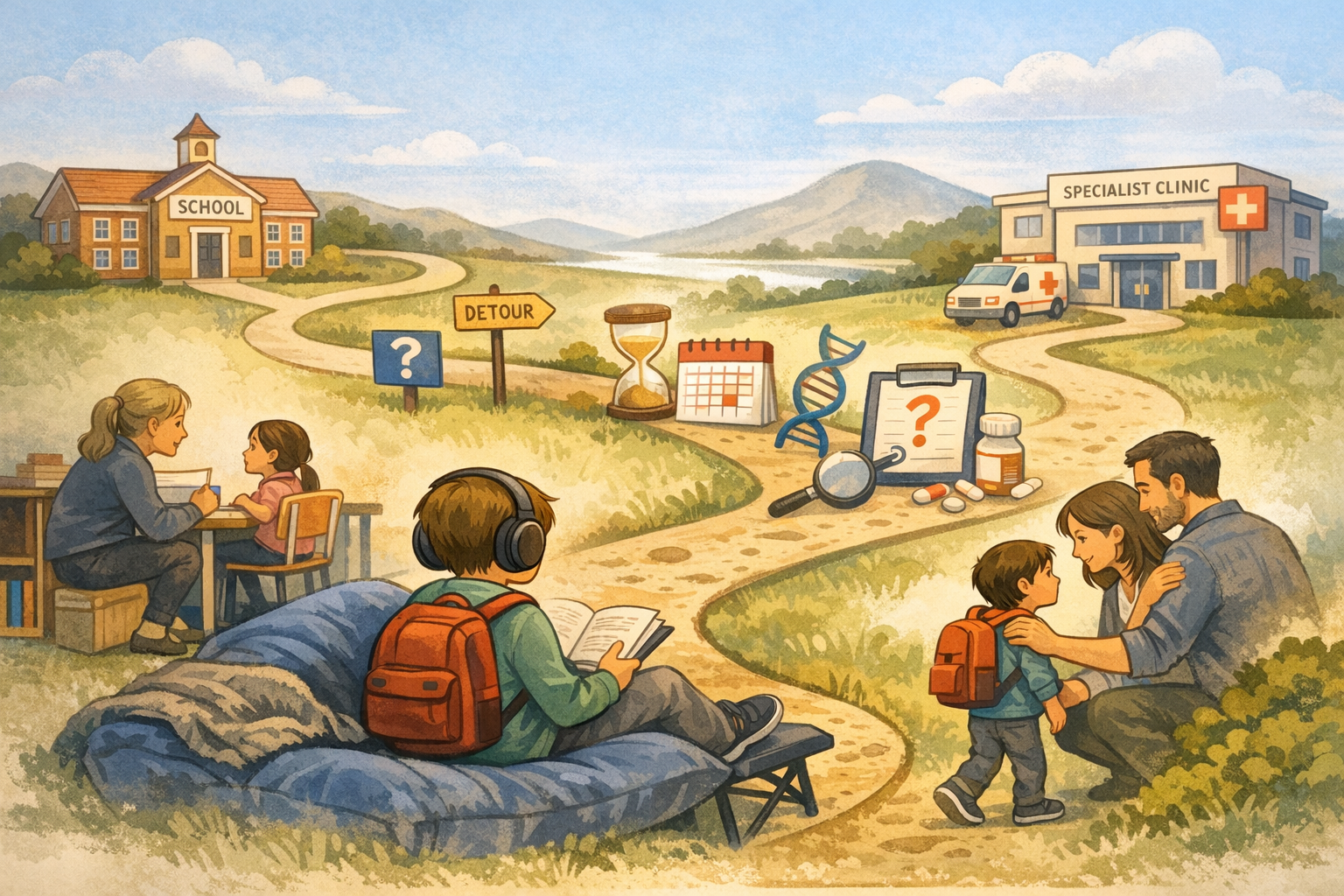
Children often experience symptoms like chronic pain, fatigue and brain fog long before they receive a diagnosis. In schools, these invisible struggles are easy to miss — and even easier to misinterpret. That’s why every school needs a clear, compassionate symptom-cluster policy: one that supports children based on need, not diagnosis.
In this blog, we explore the most common symptoms schools will encounter, why early support matters and practical, low-cost strategies that make a real difference. Supporting symptoms is safeguarding. It’s inclusion. It’s compassion in action.
Read the full blog to learn how your school can respond with clarity, confidence and compassion.

Section 19 of the Education Act: What Parents of Children With Rare Conditions Need to Know
Living with a child who has a rare condition means navigating an education system that often feels like it was never designed for your family's reality. Yet, buried within the legal framework is Section 19 of the Education Act 1996. A provision that, when understood, can be a lifeline for parents and carers.
This blog demystifies Section 19, explaining not only what it demands of Local Authorities, but also how it can empower you to advocate for your child's right to a suitable education, whatever their individual needs. We’ll explore the legal obligations, the practical implications and the common pitfalls families face, so you can approach your child’s education journey with clarity and confidence.

Beyond Autism: How rare diseases are misdiagnosed and diagnoses delayed in education
Teachers are often the first professionals to notice when something doesn’t quite add up.
At Rare4Schools, we see how greater awareness of rare diseases can prevent children being misdiagnosed or overlooked under an autism label — and help families reach answers faster.
Our latest blog explores why rare disease awareness in schools matters, how diagnostic overshadowing happens, and the powerful role teachers play in early identification.
Read why awareness can change lives.

Why Friends and Peers Matter So Deeply for Children With Rare Conditions in School
Half face bullying. Most feel isolated. Together, we can change the story for children with rare conditions.

A Grandma’s First Day of Big School
Starting school for families with a child with a rare disease can be a challenge. A supportive school makes the world of difference!

✅ Comprehensive Solutions for Supporting Children with Rare Diseases in School
For most families, the back-to-school season is a whirlwind of stationery lists, uniform fittings, and hopeful anticipation. But for families of children with rare diseases, it’s often a time of deep anxiety and emotional strain. The return to school can feel like handing over your child to a system that may not understand their condition, their needs—or their potential.
At Rare4Schools, the message is clear: “A rare disease should never be a barrier to learning.” This blog explores the worries families face and how the Rare Disease Framework can help schools and families work together to create safer, more inclusive learning environments.

Reason why number 2…
Understanding rights, laws, and how your child can get the support they deserve
Every child deserves the chance to thrive at school—but for families navigating rare diseases, ensuring that opportunity can feel like an uphill battle. Too often, schools are equipped for more common conditions, leaving children with rare diagnoses and their families searching for answers. This blog explores why a Rare Disease Framework is essential in education, what laws and rights support your child, and how parents, teachers, and health professionals can work together. Our goal? To empower you with knowledge, advocate for change, and help schools create truly inclusive environments where every child can succeed, no matter how rare their diagnosis.

The Importance of Communication to Compassion
Explore how compassionate communication can make a profound difference for individuals and families affected by rare diseases. This blog highlights why empathy, attentive listening, and openness are vital—not only for building trust and inclusion generally, but especially in the context of rare conditions where understanding and connection are often hard to find. Discover practical ways to reduce conflict, foster emotional security, and create supportive communities, even amid uncertainty and challenge. Read more to learn how a single act of communication can bring hope, healing, and a sense of belonging to those on the rare disease journey.

The Overlooked Impact: A Grandmother's Perspective on Rare Disease
The Silent Struggle of Extended Family
When a child has a rare condition, the emotional weight doesn’t stop with the parents. As a grandmother to a child with Congenital Hyperinsulinism, I’ve experienced the quiet, constant layer of worry that comes with supporting both generations.
Sleepless nights.
Double-layered worry.
Hope for a better system.
Read about “The Overlooked Impact: A Grandmother’s Perspective on Rare Disease” and why a national schools framework would mean more than just policy—it would mean peace of mind.

Reason why number 1
Why do we need the Rare Disease Framework?
Let us tell you by looking at research into teaching students with rare diseases in the UK.
